Healthcare Providers
After a rabies exposure, the rabies virus must travel to the brain before it can cause symptoms. The time between exposure and symptoms is called the incubation period. For rabies, the incubation period can last for weeks to months. Early symptoms include headache, fever, and sometimes pain at the site of the exposure (bite or scratch). The disease rapidly progresses into a severe nervous system (neurologic) illness. Symptoms include agitation, confusion, paralysis and difficulty swallowing. Most patients die within a few days or weeks of onset.
Only mammals can get rabies. Birds, fish reptiles and amphibians cannot get rabies. The most frequently reported wild animals with rabies are raccoons, foxes, skunks and bats. Rabbits, squirrels, rats and mice rarely get rabies. Contact with infeccted bats is the leading cause of human rabies deaths in this country; at least 7 out of 10 people who die from rabies in the United States were infected by bats.
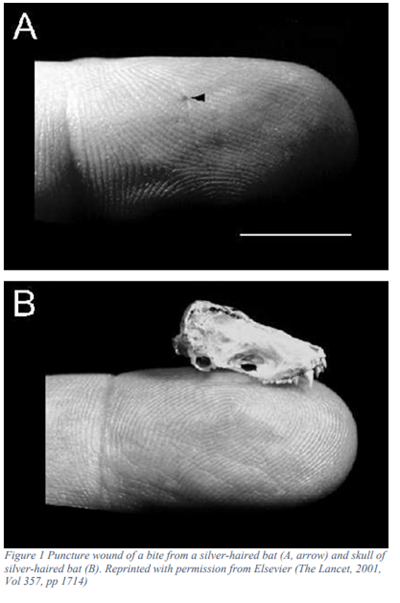
In the U.S. most rabies infections in humans are due to bat bites that were not recognized or reported. Bats make tiny teeth marks that are difficult to see, so the bite may go unnoticed. Consider bats found in a room with a child, someone sleeping, or someone unable to give a history as a possible exposure.
Bats flying overhead and bats that have not had contact with humans or animals do not pose a risk. If you are not sure if a person was potentially exposed to a suspected rabid animal, please call the health department at 406-751-8117 or our emergency after-hours line at 406-756-2900.
If a patient has an animal that they would like to submit for rabies testing, please have them reach out to the Flathead City-County Health Department at 406-751-8117.
If it is outside of business hours, please have the patient refer to these two forms for instructions on capturing the bat, and euthanizing the bat if needed. The PDFs will have instructions on how the patient can store or bring the bat into the health department.
If the patient can bring the animal into the Flathead City-County Health Department, where our staff can send in the animal for testing, then rabies PEP can be withheld until results are available. If the specimen tests positive for rabies, our communicable disease staff members will direct the patient on how to pursue treatment.
There is no time limit regarding the administration of PEP after an exposure as long as the patient hasn't developed clinical signs of rabies. In this case, it is still appropriate to initiate PEP. Administration of both human rabies immune globulin (HRIG) and four doses of rabies vaccine is recommended regardless of the time elapsed since exposure.
Yes. Regardless of whether the patient has a wound, if they want to pursue rabies PEP then they should always be administered HRIG and then the following 4 doses of rabies vaccine.
For questions on administration of rabies PEP, please see one of the following PDFs:
Post-exposure Prophylaxis (PEP) Guidelines
Need to Report a Bite or a Suspected Exposure to Rabies?
Printable PDFs
- Human Rabies Exposure Assessment Tree
- What is considered a potential exposure to rabies?
- Rabies PEP recommendations by animal
Additional Resources
Page Last Updated: Jun 23, 2026