Resources
Rabies is a virus that attacks the brain and nervous system. Without prompt medical treatment after exposure, rabies is almost always fatal. All warm blooded animals - including humans - can get rabies.
Rabies is spread through the saliva or brain tissue of an infected animal. It is most often spread through a bite. The virus can also spread if saliva or brain tissue gets into the eyes, nose, mouth or an open cut or wound. You cannot get rabies from petting an infected animal or from contact with its blood, urine or feces.
After a rabies exposure, the rabies virus must travel to the brain before it can cause symptoms. The time between exposure and symptoms is called the incubation period. For rabies, the incubation period can last for weeks or months. Early symptoms may include headache, fever and pain or tingling at the bite site. The disease quickly affects the nervous system and can cause confusion, agitation, paralysis, and trouble swallowing. Once sympomts begin, rabies is almost always fatal.
In the United States, rabies is found in wildlife. Different animal species carry different types (variants) of the virus. All states except hawaii have bats with rabies. In some states, rabies is also found in raccoons, skunks, or foxes. Within Flathead County, rabies is primarily found in bats.
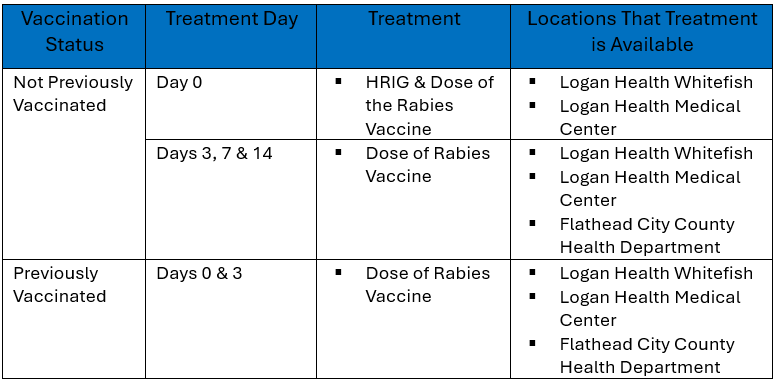
Treatment for suspected or confirmed exposure to rabies is called post-exposure prophylaxis (PEP). It includes:
- One round of human rabies immune globulin (HRIG)
- A rabies vaccine given the same day as the HRIG. This is marked as "Day 0".
- Additional rabies vaccine doses on days 3, 7 and 14.
- People with weakened immune systems or those who were previouslyt vaccinated may need a different schedule.
There are no known reasons to avoid rabies vaccination after an exposure. Rabies post-exposure treatment (PEP) is safe for:
- Pregnant people
- Infants and children
- Adults of all ages
- Immunocompromised people
Yes. In some countries, rabies in dogs is still common, especially in parts of Africa, Asia, and Central and South America. Access to rabies treatment (PEP) may also be limited. Since 1990, over 80 people in the US have died from rabies contracted while traveling. To reduce your risk:
- Avoid contact with wild or unfamiliar animals, including dogs and cats
- Talk to your doctor, a travel clinic, or your local health department before traveling to learn about your risk and any recommended precautions.
- If you would like to schedule a pre-travel consultation to discuss recommended immunizations, please visit the FCCHD website at Travel Immunizations :: Flathead County for more information or call 406-751-8110.
There are many things you can do to protect yourself, your family, and pets from rabies.
- Stay away from wild animals
- Vaccinate your pets against rabies per state and local laws
- Don't touch, pick up, or relocate any wild animals or stray domestic animals
- Don't feed wild animals or make your yard inviting to them.
- Remove trash and secure garbage cans. Do not leave pet food outside.
- Keep family pets indoors at night. During the day, don't let them roam.
- Report unknown, strangely behaving, or deceased animals to USDA Wildlife Services, your local animal control office, or your state wildlife agency.
Please visit our bat page for more information or call the communicable disease office at 406-751-8117.
Please visit our Pet and Livestock page for more information on suspected or confirmed rabies exposures to cats, dogs or livestock.
The Rabies Control Program is based within the health department and includes our communicable disease staff, Flathead County Animal Shelter, Animal Control Officers and Law Enforcement Agencies if necessary. The purpose of this program is to protect the public health, safety and welfare of the people and animals of Flathead County and to control and prevent the spread of rabies.
Need to Report a Bite or a Suspected Exposure to Rabies?
Rabies Post-exposure Prophylaxis (PEP)
Rabies post-exposure prophylaxis (PEP) includes wound care, human rabies immune globulin (HRIG), and a four-dose vaccine series.